Noland Earthworks — Built on American Strength
Back to Resources
Planning & Preparation·6 min read

Site Preparation 101: What to Do Before You Build in Tennessee

N
Noland Earthworks Team
Veteran-owned land clearing & forestry mulching specialists, Middle Tennessee

You've found the land. Maybe you've already closed on it. Now comes the question that every new Tennessee landowner eventually asks: What do I need to do before I can build? Site preparation is the critical bridge between raw land and a buildable lot — and skipping steps here can cost you far more than doing it right the first time.

This guide walks through the five essential site prep steps for building in Tennessee, whether you're putting up a home, a barn, a shop, or a commercial structure.

Step 1: Survey and Stake Your Property

Before any clearing or grading begins, you need to know exactly where your property lines are. A licensed land surveyor will mark your boundaries and identify any easements, setbacks, or encroachments that affect what you can build and where. In Tennessee, most counties require a current survey before issuing a building permit.

Don't skip this step. Clearing the wrong area — even by a few feet — can lead to costly legal disputes with neighbors or require you to replant or restore cleared land.

Step 2: Land Clearing and Vegetation Removal

Once you know your boundaries, it's time to clear the building envelope and access areas. This typically includes removing trees, brush, stumps, and any existing vegetation from the footprint of your structure, driveway, and utility corridors.

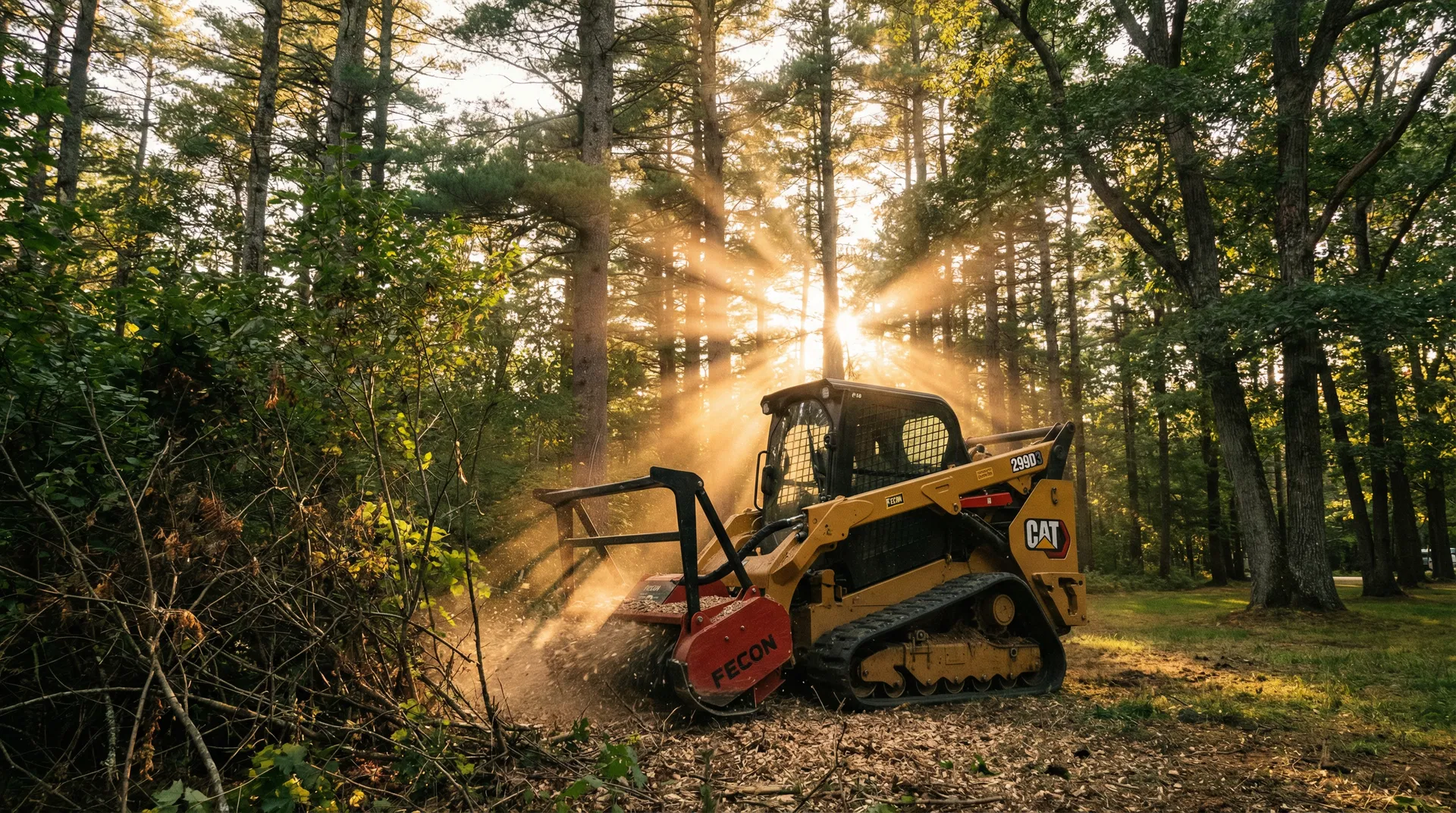
In Middle Tennessee, forestry mulching is often the most efficient method for this step. A single machine grinds trees, brush, and stumps into mulch in one pass — no burning permits, no hauling fees, and minimal soil disturbance. For larger trees or full-site clearing, traditional equipment like bulldozers and excavators may be used alongside or instead.

The goal at this stage is a clean, open building site with no vegetation competing with your foundation or interfering with drainage.

Step 3: Grubbing and Stump Removal

Clearing removes above-ground vegetation, but grubbing addresses what's underground — root systems, buried stumps, and organic debris. Any organic material left in the soil beneath a foundation will decompose over time, causing settlement and structural problems.

For a home pad or commercial foundation, grubbing is non-negotiable. For a gravel driveway or outbuilding pad, you may be able to get away with less aggressive grubbing depending on the soil conditions. Your contractor or engineer can advise on the appropriate depth of removal for your specific build.

Step 4: Rough Grading

Rough grading shapes the land to direct water away from your structure and establish the correct elevation for your foundation. In Tennessee, where heavy rain events are common, proper grading is one of the most important factors in long-term structural health.

A general rule of thumb is a minimum 6-inch drop over the first 10 feet away from the foundation on all sides. Your building contractor or civil engineer will specify the exact grades required for your site. Rough grading is typically done with a bulldozer or motor grader and may require importing or exporting fill material depending on your existing topography.

Step 5: Erosion and Sediment Control

Tennessee's NPDES (National Pollutant Discharge Elimination System) regulations require erosion and sediment controls on most construction sites disturbing more than one acre. Even for smaller projects, controlling erosion during construction protects your topsoil and prevents sediment from reaching nearby streams and waterways.

Common erosion control measures include silt fences along the downhill perimeter, straw wattles around storm drains, seeding or hydroseeding disturbed areas not immediately under construction, and temporary gravel pads at driveway entrances to reduce mud tracking onto public roads. Your contractor should install these before any grading begins and maintain them throughout construction.

What Comes After Site Prep?

Once your site is cleared, grubbed, graded, and protected, you're ready for the next phase: utility installation (water, sewer or septic, electric, gas), final grading, and ultimately your foundation. Many landowners also use this window to install a driveway and any outbuildings before the main structure goes up.

The timeline from raw land to a build-ready site varies widely depending on acreage, vegetation density, and terrain — but for a typical residential lot in Middle Tennessee, expect 1–5 days for clearing and grubbing, and another 1–3 days for rough grading and erosion control installation.

Ready to Get Started?

Noland Earthworks handles land clearing, forestry mulching, grubbing, and site preparation across 35 counties in Middle and West Tennessee. We work directly with homeowners, builders, and developers to prepare sites efficiently and professionally. Request a free estimate and we'll walk your property, assess the scope, and give you a clear picture of what your site prep will involve.

Ready to get started?

Contact Noland Earthworks today for a free, no-obligation on-site estimate anywhere in Middle Tennessee.

Get a Free Quote →